All content and product details on this site are for educational purposes only. Products are for in-vitro studies (performed outside the body) and not FDA-approved for medical use. Any introduction into humans or animals is prohibited by law.
Categories
Recent Posts
I Tried a Research-Backed Peptide for My Thinning Hair — Here’s My Story
I never thought it would happen to me. None of the men in my family had ever suffered from hair loss, including my dad. But by the time I hit 38, I was doing what every guy with a slowly receding hairline does, pretending it didn’t bother me.
Bacteriostatic Water Comparison: Bacteriostatic Water vs TM BioWater vs Generic
Bacteriostatic water is one of the most common laboratory consumables in peptide research. It is sold under several brands and as unbranded generic product. Every product in the category is built on the same basic formula, so the differences come down to manufacturer, container, labelled standard, shelf life and documentation. This guide compares the two products Power Peptides stocks, Bacteriostatic Water and TM BioWater, with generic bacteriostatic water. It also explains what to check on any vial before it enters a laboratory workflow.
What Is P21 Peptide?
P21, also written P021 or Peptide 021, is a small synthetic peptide compound developed from ciliary neurotrophic factor (CNTF), a naturally occurring protein that supports the development and maintenance of the nervous system. Researchers designed P21 to capture the activity of one short region of CNTF in a molecule that is far smaller and more stable than the full protein. Since its first description in 2010, it has been studied in cell cultures and a range of rodent models, mainly in neuroscience research on neurogenesis, synaptic plasticity and tau biology.
I Tried a Research-Backed Peptide for My Thinning Hair — Here’s My Story

Brief Overview/Summary
I never thought it would happen to me. None of the men in my family had ever suffered from hair loss, including my dad. But by the time I hit 38, I was doing what every guy with a slowly receding hairline does, pretending it didn’t bother me.
But it did. A lot more than I wanted to admit.
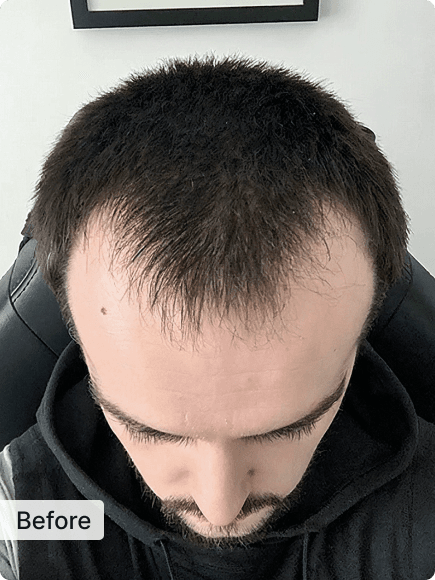
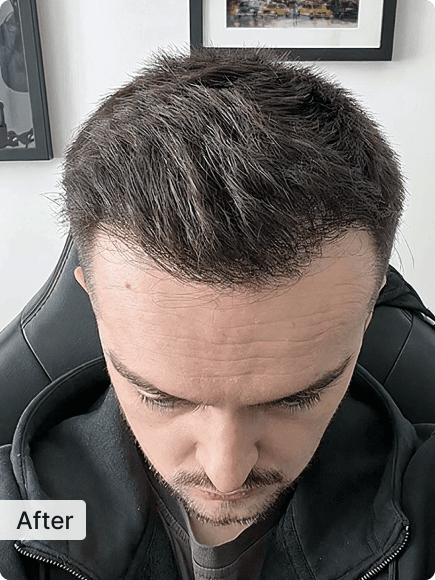
I’d started noticing subtle changes around my temples a few years earlier. Showers left more hair in the drain. Photos from certain angles made my scalp look shiny where the hair used to be thick. Like so many other guys, I started trying the usual available remedies: hair vitamins, caffeine shampoos, scalp massages — even the occasional course of minoxidil. Nothing really seemed to make a difference, and honestly, I was getting tired of products that promised the world but failed to deliver.
That’s when I stumbled across something different: a research peptide called PTD-DBM.
Hair Loss: It’s More Than “Just Hair”
For me, my hair loss hit deeper than vanity or aesthetics — it was a subtle but constant reminder that I was getting older. It made me feel less vital.
And I wasn’t alone. According to the American Hair Loss Association, two-thirds of men will experience some degree of hair thinning by the age of 35. For women, the stats are equally sobering: studies show that as many as 40% experience noticeable thinning by age 50, often triggered by hormonal shifts like pregnancy or menopause.
So, hair loss is very common. But that doesn’t make it easier when it’s your reflection changing in the mirror.
So when I first read about PTD-DBM on a research peptide supplier’s site, I was skeptical, but curious.
My Discovery: PTD-DBM and Its Unique Mechanism
Unlike over-the-counter solutions that claim to increase blood flow or prolong the hair’s growth cycle, PTD-DBM is a synthetic peptide that researchers have been studying for its potential to directly influence the biological processes associated with hair follicle activity.
What does this mean?
In laboratory research, PTD-DBM has been shown to interact with proteins known as CXXC5 and Dishevelled, which play a role in regulating the Wnt/β-catenin pathway — a key biological process linked to hair follicle regeneration. Through this action, PTD-DBM may help restore this pathway’s natural activity, supporting an environment that could be more favorable for hair growth. (J. Dermatol Sci. 2017;88(2):211–222.)
That was the first thing that stood out to me. This wasn’t another “vitamin cocktail” or herbal tonic. It was something being discussed in scientific papers. That credibility mattered.
Why I Decided to Try It
I’m not a scientist, but I’ve spent enough time reading studies to appreciate when something has genuine research behind it. PTD-DBM isn’t a miracle cure (and it’s not approved as a drug or cosmetic treatment), but it’s being used in laboratory settings to explore the biological mechanisms behind hair regeneration.
The more I read, the more I wanted to see whether incorporating it into my routine could make a difference, not as a replacement for healthy habits, but as a new piece of the puzzle.
So I ordered a vial from PowerPeptides.com, which offers PTD-DBM for research and educational use. What impressed me was how transparent they were about its purpose, purity testing, and proper storage, with no gimmicks or inflated claims.
My PTD-DBM Routine
I decided to document my experience over 12 weeks. My goal wasn’t to “regrow all my hair overnight” (because let’s be honest, that’s not realistic), but to determine if I could see any significant results over time.
Here’s what my routine looked like:
Weeks 1–2:
I continued using my mild caffeine shampoo and made sure to massage my scalp regularly.
Weeks 3–6:
I began incorporating PTD-DBM into my routine, following the supplier’s guidance for consistency. I took photos of my progress every two weeks.
Weeks 7–12:
I looked for changes I could see and feel—density, texture, and overall appearance.
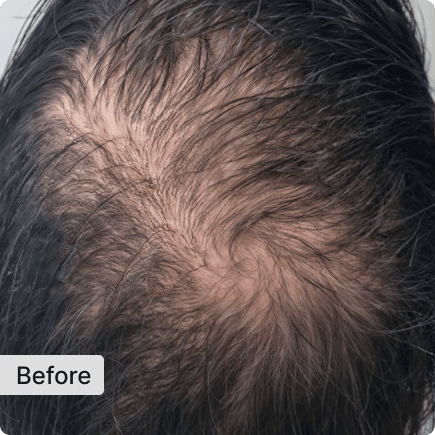
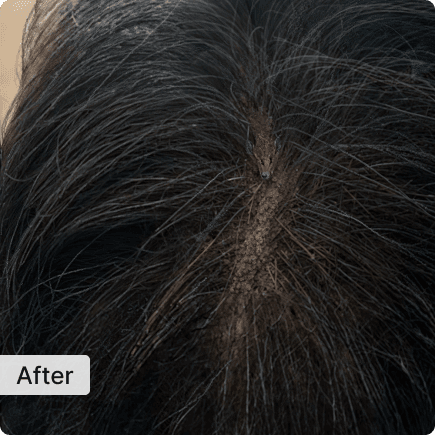
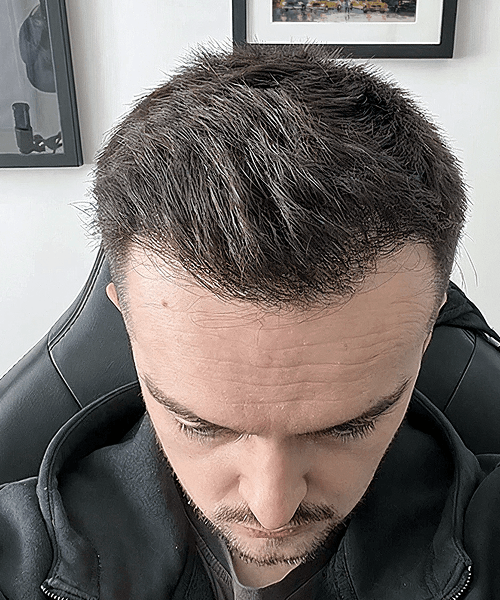
During the first month, I didn’t expect (and didn’t see) drastic changes. But around week six, I started noticing something subtle: my thinning areas seemed less, well, thin. The hair that was there felt stronger and slightly thicker to the touch.
At three months, the difference wasn’t dramatic, but it was noticeable enough that my barber asked what I’d been doing differently.
What I Observed
To be clear, my experience isn’t a clinical result, but here’s what stood out after 12 weeks:
- Improved texture: My hair felt stronger and looked a bit more voluminous under
- Reduced shedding: I noticed fewer hairs in the shower and on my pillow.
- Healthier scalp: There was less dryness and irritation, possibly because I’d been more consistent with scalp care in general.
Was my hairline back to what it was at 25? No. But for the first time in years, I actually liked how it looked in photos again.
What Makes PTD-DBM Stand Out
So what drew me to PTD-DBM? Basically, it was how different it is from traditional options like minoxidil.
- Minoxidil works by improving scalp blood flow, but it needs ongoing use to maintain effects.
PTD-DBM, on the other hand, takes an approach that’s scientifically rooted in cellular signaling. It doesn’t block hormones or act as a stimulant; instead, it’s being explored in research for how it might influence pathways that naturally regulate follicle function.
(NIH National Library of Medicine 2023 Feb 9;12(4):555J.)
For me, this made it feel like a smarter, more biology-aligned option—one that could potentially complement other approaches, rather than replace them.
Frequently Asked Questions I Had (and You Might Too)
These are just a few FAQs I aggregated from some online resources. Since DTD-DBM appears to have such potential, there’s a fair amount of information about it out there. That said, it’s important to remember that this compound is for research use only.
- Is PTD-DBM safe?
Yes. It’s a topical peptide formulation, not a hormone or prescription drug. Always patch-test before use, of course, and consult a professional if you’re pregnant, nursing, or under medical care. - Is PTD-DBM safe?
PTD-DBM is a synthetic research peptide, not a drug or cosmetic product. It’s designed for laboratory use only, and not intended for human or veterinary application. Always review research materials carefully and purchase from reputable suppliers that provide certificates of analysis. - How long before you’ll see results?
In my personal experience, visible changes took about 6–8 weeks. Research on hair follicle activity typically notes that meaningful changes occur over several growth cycles—usually months, not days. - Can women use PTD-DBM?
Hair loss isn’t gender-specific, and PTD-DBM’s mechanism of action is based on cellular signaling rather than hormonal targeting, meaning it’s being studied in various research contexts. - How does PTD-DBM differ from other peptides or growth factors?
Many peptides in hair research target growth factor expression or scalp circulation. PTD-DBM stands out because of its focus on Wnt/β-catenin signaling, one of the most studied pathways for follicle activation. - Where can I find it?
There are quite a few suppliers of research peptides online these days, but it’s a good idea to make sure that yours is reputable and stands behind their products. The PTD-DBM I used came from PowerPeptides.com, which provides information on purity and handling for all of its research peptides.
What Other Users Are Saying
While my results were my own, I wasn’t alone in noticing improvements. On peptide research forums and scientific communities, discussions around PTD-DBM often highlight its potential as one of the more promising areas of peptide-based hair restoration.
A few testimonials I came across echoed my observations, with users describing thicker-feeling hair, less shedding, and improved scalp texture after several weeks of consistent use. Since PTD-DBM isn’t approved as a treatment, these experiences should be viewed as anecdotal insights rather than evidence.


What I Learned From This Experience
After three months of incorporating PTD-DBM into my routine, here’s what I’ve taken away:
1. Consistency matters. Nothing works overnight; the key is patience and routine.
2. Science-based approaches feel different. When something is based on solid scientific research, it’s easier to stick with it.
3. Holistic care is essential. Scalp health, diet, stress, and sleep all contribute to the bigger picture.
4. It’s about confidence. The biggest change wasn’t just my hair. Like I said earlier, it was how I felt about myself, and how I felt looking in the mirror again.
Final Thoughts
When you’re losing your hair, baldness can feel inevitable, but research is opening new doors. PTD-DBM is part of a growing field of peptides being explored for their potential to support scalp and follicle health.
While it’s still early in the journey, and more research is needed, PTD-DBM offers a glimpse into what the next generation of science-backed hair support might look like; one that moves beyond surface-level solutions toward a deeper understanding of biology.
If you’re as curious as I was about where this research could lead, you can learn more or explore PTD-DBM at PowerPeptides.com.
Disclaimer: PTD-DBM is a research-use-only peptide not approved for human or veterinary use. The experiences described above are personal and observational. Individual results may vary. Always consult a qualified professional before beginning any new research or health-related routine.
Read more about peptides

PT-141 Peptide: Bremelanotide as a Melanocortin Agonist
Investigate studies on PT-141 peptide (Bremelanotide), its effect on melanocortin receptors, and its involvement in research on sexual function.

TB-500 Peptide Research: Cellular Regeneration and Metabolite Studies
Explore research on TB-500 peptide and its role in tissue regeneration, wound healing, and actin regulation through scientific studies.